
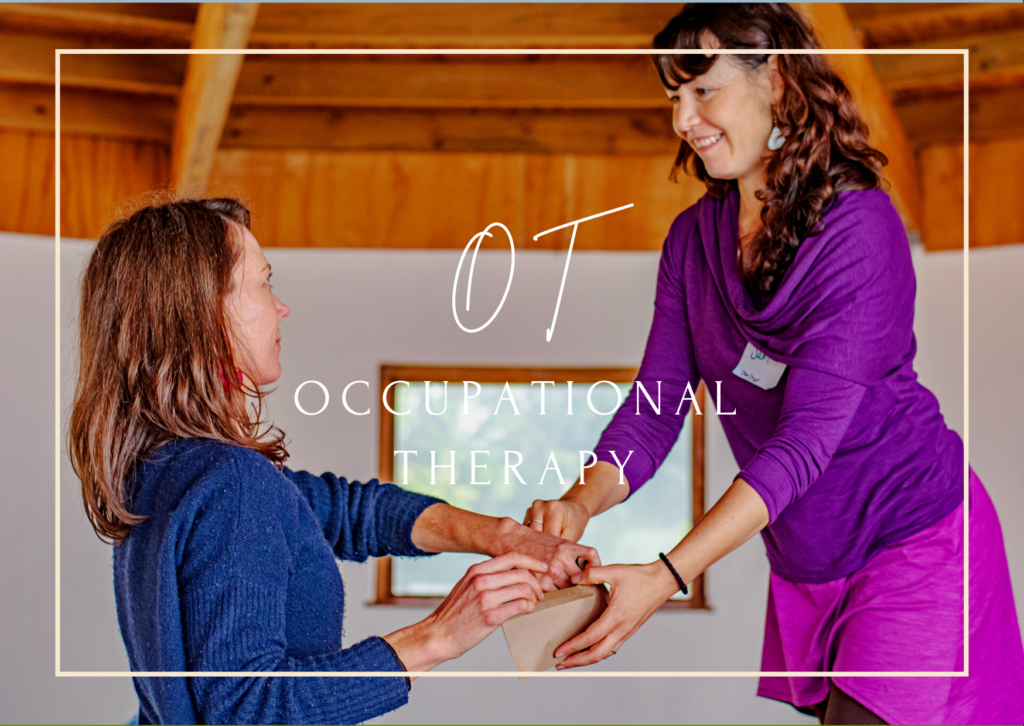

Mental Health Occupational Therapy
“I think we live in a world where the most important thing is daily life: sharing a space with your family, making meals, being with your people. It’s not only the idea of privacy, it’s the beauty of the moment, at a time in the world when everything goes really fast – too fast.”
Ana Tijoux
As a mental health occupational therapist, I believe mental health is supported by full participation in daily life or occupations. The term ‘occupation’ means the things we want and need to do to live life to the fullest.
Daily occupations can be as simple as brushing teeth or as complex as designing an advertising campaign. No matter how simple or complex daily tasks are, participating in occupations gives life meaning and meets many human needs such as autonomy, freedom, self-expression and self-determination.
The way occupations are patterned also contributes to the flow of life. Roles in the community, in the home or in organisations can be meaningful and meet many needs such as belonging, stimulation, support and competence. How we organise ourselves through habits and routines also impacts the flow of life. Some tend towards having too much to do and experience role overload. Others have too little to do and experience boredom. Both can lead to occupational imbalance and poor health. Occupations also change over time. When we move home, retire or experience a change in health or physical condition; suddenly all of our roles, habits and routines need re-organizing to make new meaning out of life.
We experience the richness of life also through our interactions with others in relationships with our loved ones, friends and colleagues. Being diagnosed with a mental health condition may mean one experiences a combination of cognitive, emotional or behavioural difficulties that impact relationships personally, professionally and socially.

Comprehensive Assessment Attunes To:
Once the evaluation is complete, we will collaborate to come up with mutually agreed upon goals to support your mental health. We will discuss what outcomes you are hoping for and create a map of how to get there.
Mental health Occupational Therapy Encourages:
Restoring or Building Valuable Skills
Cognitive rehabilitation
Psychoeducation
Relaxation and Somatic therapy
Mindfulness training
Establishing effective daily routines
Building life skills like time management, planning, prioritising, stress management, coping and problem-solving skills
Building interpersonal skills such as effective communication, assertiveness, anger management
Improving engagement in daily activities such as constructive use of free time, health and medication management, financial management, household management
Developing vocational and prevocational skills such as compiling a CV, handling an interview, work competency skills
Imagining Alternatives
Explore new ways of meeting your needs
Develop coping strategies
Plan ahead for how you would like to be cared for (Wellness Action Recovery Plan).
Change the environment working with loved ones to train them how to support you with family participation
Promote community integration
Modify your home environment to better support your needs
Implement reasonable accommodations at work